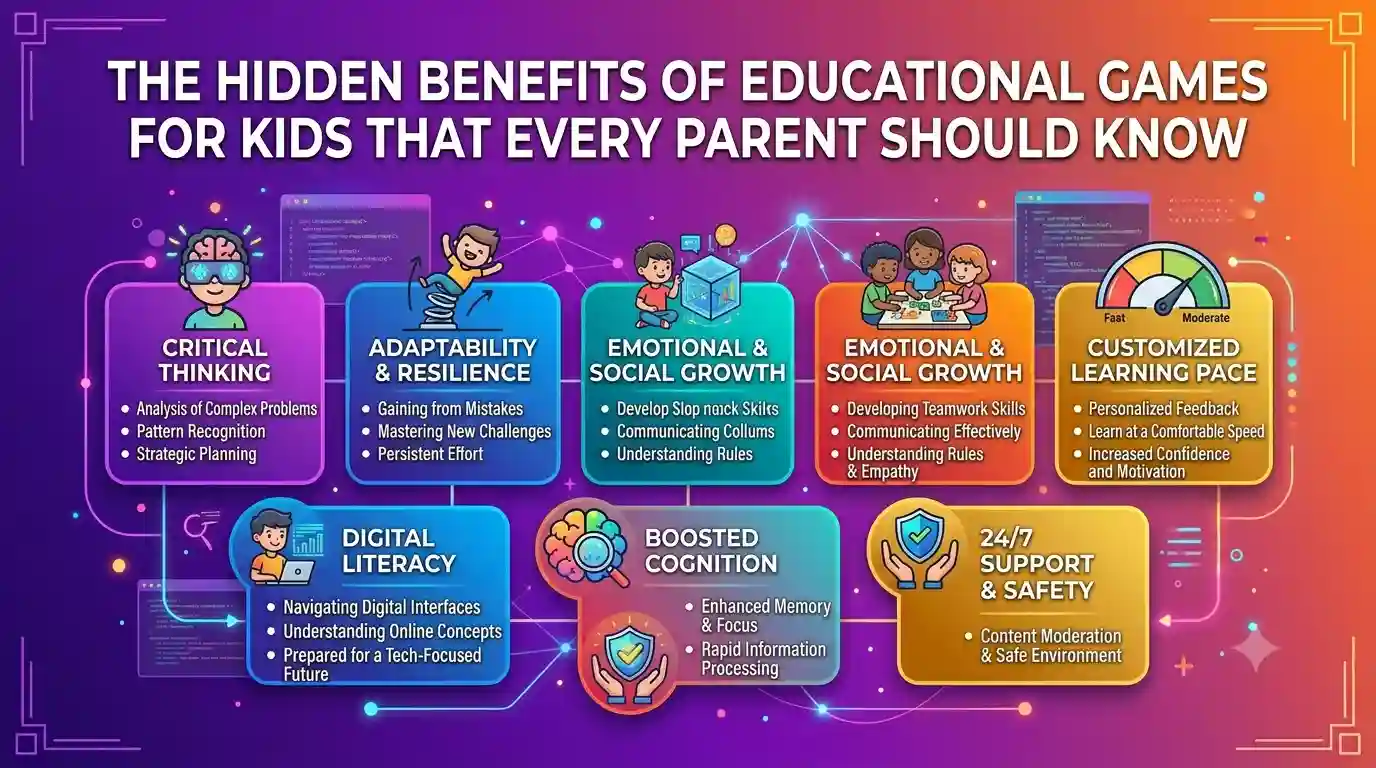
Educational games have become one of the most effective ways to help children learn while having fun. In today’s digital world, kids spend a significant amount of time on smartphones, tablets, and computers. Instead of only using these devices for entertainment, educational games can transform screen time into a valuable learning experience.
Unlike traditional learning methods, educational games keep children engaged through interactive challenges, colorful visuals, and rewarding achievements. These games encourage children to think critically, solve problems, and develop essential skills that can help them succeed both in school and in everyday life.
One of the biggest advantages of educational games is that they make learning enjoyable. Many children find textbooks and worksheets boring, but they become excited when learning is presented as a game. This increased engagement often leads to better retention of information and improved academic performance.
Educational games are available for various subjects, including mathematics, science, language arts, geography, and coding. Whether a child is learning basic counting skills or advanced problem-solving techniques, there is likely a game designed to support that learning journey.
Why Educational Games Are Becoming Popular
Parents and teachers are increasingly recognizing the value of educational games because they combine entertainment with meaningful learning experiences. Modern educational games are carefully designed to align with educational standards while keeping children motivated.
Many games use levels, rewards, badges, and challenges to encourage continuous progress. These elements help children stay focused and motivated while developing important academic and cognitive skills.
Additionally, educational games often provide instant feedback. When children make mistakes, they can quickly learn from them and try again. This encourages persistence and helps build confidence over time.
Key Benefits of Educational Games
1. Improved Problem-Solving Skills
Many educational games require players to analyze situations, identify patterns, and find solutions. These activities strengthen critical thinking abilities and help children become more effective problem solvers.
2. Better Memory and Concentration
Educational games often challenge children to remember information, follow instructions, and stay focused on tasks. Regular practice can improve memory retention and attention span.
3. Enhanced Creativity
Creative games encourage children to build, design, experiment, and explore new ideas. This helps develop imagination and innovative thinking skills that are valuable throughout life.
4. Stronger Academic Performance
Many educational games reinforce classroom concepts in an engaging way. Children can practice math, reading, science, and other subjects while enjoying interactive gameplay.
5. Increased Motivation to Learn
The reward systems found in educational games help children stay motivated. Earning points, unlocking levels, and achieving goals create a positive learning environment.
Educational Games and Social Development
Educational games can also support social development. Multiplayer educational games teach children how to communicate, cooperate, and work as part of a team. These experiences help build important interpersonal skills.
Some games encourage children to share ideas, solve challenges together, and support one another during learning activities. These interactions can strengthen communication and collaboration abilities.
Digital Skills for the Future
Technology continues to play an important role in modern society. Educational games help children become familiar with digital tools and technology from an early age.
Many games introduce concepts such as coding, logical thinking, and digital literacy. These skills may become increasingly valuable as children grow and prepare for future careers.
Choosing the Right Educational Games
Not all games provide the same educational value. Parents should look for games that:
- Match the child’s age and skill level.
- Focus on educational objectives.
- Provide a safe and child-friendly environment.
- Encourage learning rather than excessive screen time.
- Offer positive feedback and constructive challenges.
Reading reviews and testing games before introducing them to children can help ensure a high-quality learning experience.
Balancing Learning and Screen Time
While educational games offer many benefits, balance remains important. Children should also participate in physical activities, outdoor play, reading, and family interactions.
Experts generally recommend creating a healthy schedule that combines educational technology with other developmental activities. This balanced approach allows children to enjoy the benefits of educational games without becoming overly dependent on screens.
The Future of Educational Gaming
The educational gaming industry continues to grow rapidly. Advances in artificial intelligence, virtual reality, and interactive learning technologies are creating even more engaging educational experiences.
Future educational games may offer highly personalized learning paths that adapt to each child’s strengths, weaknesses, and learning style. These innovations could make learning more effective and enjoyable than ever before.
Conclusion
Educational games are far more than simple entertainment. They provide children with opportunities to improve problem-solving skills, strengthen memory, enhance creativity, and develop important academic abilities. When used responsibly and combined with other learning activities, educational games can become a powerful tool for supporting a child’s growth and development.
Parents who choose high-quality educational games can help transform screen time into a meaningful learning experience that prepares children for success in school and beyond.